Transcranial stimulation for depression refers to a non-invasive, evidence-informed mental health treatment used to support adults experiencing depressive symptoms that have not sufficiently improved with traditional approaches such as therapy or medication alone. Increasingly, this treatment is considered for individuals seeking additional options within a structured behavioral health office.
At SNBCare, transcranial stimulation for depression is offered as part of a comprehensive outpatient mental health treatment plan for eligible adults in Massachusetts and Rhode Island. Importantly, all recommendations follow a thorough psychiatric evaluation and align with clinical appropriateness and patient-specific goals.
Understanding Transcranial Stimulation for Depression
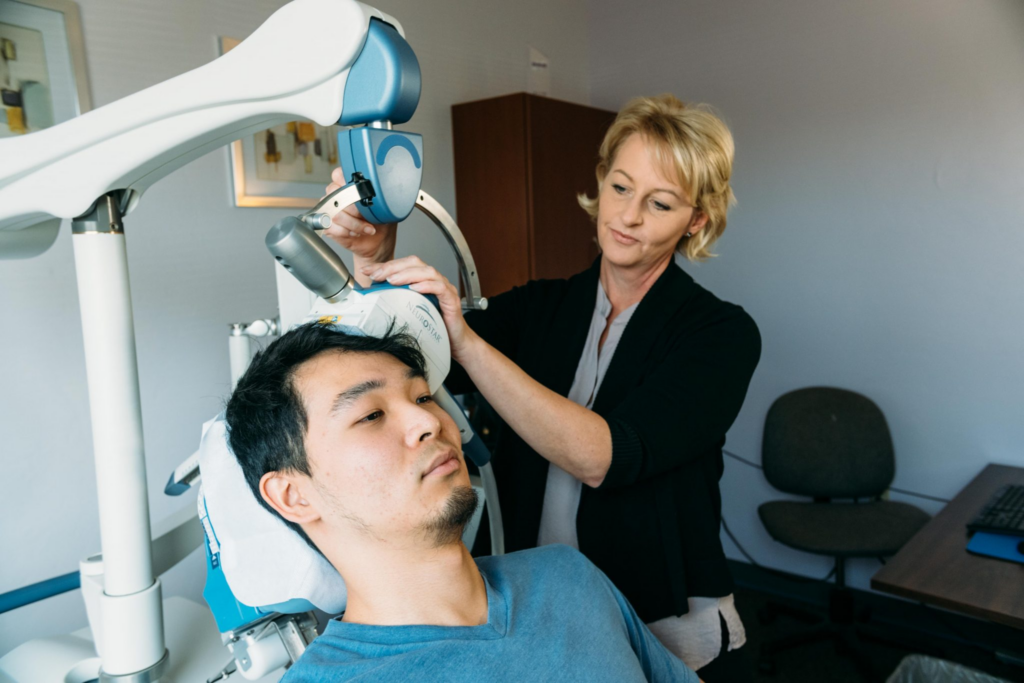
Transcranial stimulation for depression most commonly refers to Transcranial Magnetic Stimulation (TMS). This treatment uses targeted magnetic pulses to stimulate specific areas of the brain involved in mood regulation. Research suggests that certain brain regions may function differently in individuals with major depressive disorder, which may contribute to persistent symptoms.
Unlike systemic medications, transcranial stimulation focuses directly on brain circuits associated with emotional regulation. As a result, it does not involve sedation, anesthesia, or surgical intervention. Patients remain awake and alert throughout the procedure.
Who May Benefit From Transcranial Stimulation
Transcranial stimulation for depression may be considered for adults who:
- Have a diagnosis of major depressive disorder
- Have not experienced adequate improvement with antidepressant medications
- Experience side effects that limit medication use
- Prefer a non-pharmacological treatment option
- Continue to experience symptoms that affect daily functioning
However, eligibility is never assumed. A licensed psychiatric provider evaluates each individual to determine whether transcranial stimulation is appropriate based on clinical history and current symptoms.
How Transcranial Stimulation Works
Transcranial stimulation works by delivering focused magnetic pulses to targeted areas of the brain involved in mood and emotional processing. Specifically, these pulses aim to activate neural pathways that may be underactive in depression.
Key characteristics include:
- Non-invasive, outpatient-based treatment
- No systemic medication exposure
- No anesthesia or recovery time required
- Administered by trained clinical professionals
- Delivered over a structured series of sessions
Consequently, many adults can resume normal daily activities shortly after each session.
Transcranial Stimulation vs. Other Depression Treatments
Transcranial stimulation differs from other depression treatments in several important ways. For example, antidepressant medications affect neurotransmitters throughout the body, while transcranial stimulation targets specific brain regions associated with mood.
Additionally:
- It does not require daily medication intake
- It avoids common medication-related systemic side effects
- It may be used alongside therapy or medication as part of integrated care
That said, transcranial stimulation is not intended to replace psychotherapy or psychiatric care. Instead, it often complements existing mental health treatments.
The Role of Behavioral Health Providers
Licensed behavioral health providers play a central role in transcranial stimulation for depression. At SNBCare, psychiatrists and other qualified clinicians:
- Conduct comprehensive psychiatric evaluations
- Review prior treatment history and response
- Assess symptom severity and functional impact
- Monitor progress throughout the treatment course
- Adjust the treatment plan when clinically appropriate
Through collaboration, providers ensure that care remains patient-centered and aligned with evidence-informed standards.
What to Expect During Transcranial Stimulation Treatment
Initial Psychiatric Evaluation
Before starting treatment, patients undergo a detailed psychiatric evaluation. During this process, the provider reviews mental health history, prior medication trials, and current symptoms. This step ensures safety and clinical appropriateness.
Treatment Sessions
Transcranial stimulation is delivered during scheduled outpatient sessions. Typically:
- Sessions occur several times per week
- Each session lasts under an hour
- Patients remain awake and seated comfortably
- A magnetic coil is positioned near the scalp
Some individuals report mild tapping sensations or temporary scalp discomfort during treatment, which providers discuss in advance.
Safety and Side Effects
Transcranial stimulation for depression is generally well tolerated when delivered according to established clinical guidelines. Nevertheless, potential side effects may include:
- Mild scalp discomfort
- Temporary headache
- Tingling sensations near the treatment area
Serious adverse effects are rare. Importantly, clinicians monitor patients throughout treatment and adjust protocols if needed.
Integrating Transcranial Stimulation With Therapy
Transcranial stimulation works best as part of a broader mental health treatment plan. For this reason, many adults continue:
- Individual psychotherapy
- Psychiatric medication management
- Behavioral and lifestyle-based interventions
By combining biological and therapeutic approaches, patients often receive more comprehensive support for depression and related symptoms.
Transcranial Stimulation and Sleep Health
Depression and sleep concerns often occur together. At SNBCare, behavioral health providers collaborate with an in-house sleep psychiatrist (MD) to support adults whose depressive symptoms overlap with sleep-related issues.
This interdisciplinary model allows coordinated evaluation and treatment planning within one outpatient behavioral health practice.
Why Choose SNBCare for Transcranial Stimulation
SNBCare is a licensed outpatient behavioral health clinic providing evidence-informed mental health services for adults. Our approach emphasizes:
- Licensed, experienced psychiatric providers
- Ethical and patient-centered care
- Thorough psychiatric evaluation
- Integrated therapy and medication support
- In-person services in Massachusetts and Rhode Island
All services are offered based on clinical appropriateness and provider availability.
What Transcranial Stimulation Is Not
To ensure transparency:
- Transcranial stimulation is not a guaranteed cure
- Results vary between individuals
- It does not replace emergency mental health services
- It is offered only after appropriate evaluation
Clear communication and informed consent remain essential parts of care.
Frequently Asked Questions
Is transcranial stimulation painful?
Most adults report mild discomfort rather than pain, which often lessens over time.
How long does treatment last?
Treatment duration varies depending on clinical recommendations and individual response.
Can I continue medication during treatment?
In many cases, yes. Providers determine this on an individual basis.
Is transcranial stimulation covered by insurance?
Coverage varies by plan. SNBCare’s administrative team can assist with general questions.
Accessing Transcranial Stimulation for Depression at SNBCare
Adults interested in transcranial stimulation for depression begin with a psychiatry appointment at SNBCare. Following evaluation, providers discuss appropriate treatment options based on symptoms, history, and clinical need.
Search terms such as “transcranial stimulation for depression,” “magnetic treatment for depression,” or “behavioral health clinic near me” may help adults locate SNBCare services in Massachusetts and Rhode Island. To schedule an appointment contact us at 781-666-2711 or visit www.snbcare.com.
Disclaimer
This content is for informational purposes only and is sponsored by SNBCare, a licensed behavioral health provider serving adults in Massachusetts and Rhode Island. It does not constitute medical advice, diagnosis, or treatment. Services are available only to adults physically located in Massachusetts or Rhode Island at the time of their appointment. All treatment decisions are made in consultation with licensed healthcare professionals.