Transcranial stimulation for depression refers to a non-invasive, evidence-informed mental health treatment used to support adults experiencing depressive symptoms that have not sufficiently improved with traditional approaches such as therapy or medication alone. Increasingly, this treatment is considered for individuals seeking additional options within a structured behavioral health office.
At SNBCare, transcranial stimulation for depression is offered as part of a comprehensive outpatient mental health treatment plan for eligible adults in Massachusetts and Rhode Island. Importantly, all recommendations follow a thorough psychiatric evaluation and align with clinical appropriateness and patient-specific goals.
Understanding Transcranial Stimulation for Depression
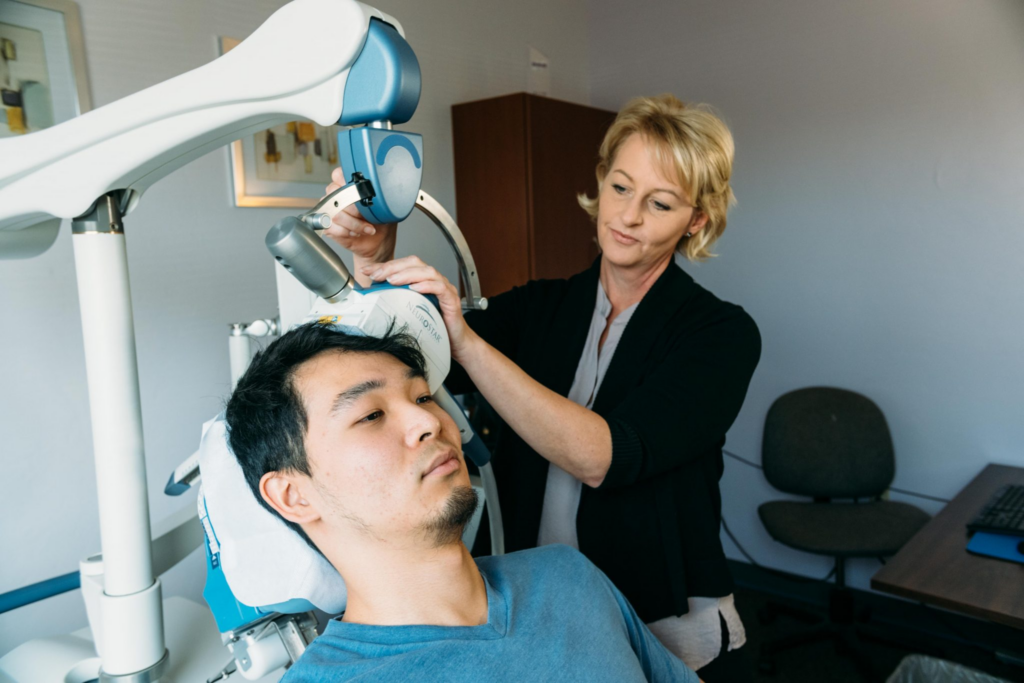
Transcranial stimulation for depression most commonly refers to Transcranial Magnetic Stimulation (TMS). This treatment uses targeted magnetic pulses to stimulate specific areas of the brain involved in mood regulation. Research suggests that certain brain regions may function differently in individuals with major depressive disorder, which may contribute to persistent symptoms.
Unlike systemic medications, transcranial stimulation focuses directly on brain circuits associated with emotional regulation. As a result, it does not involve sedation, anesthesia, or surgical intervention. Patients remain awake and alert throughout the procedure.
Who May Benefit From Transcranial Stimulation
Transcranial stimulation for depression may be considered for adults who:
- Have a diagnosis of major depressive disorder
- Have not experienced adequate improvement with antidepressant medications
- Experience side effects that limit medication use
- Prefer a non-pharmacological treatment option
- Continue to experience symptoms that affect daily functioning
However, eligibility is never assumed. A licensed psychiatric provider evaluates each individual to determine whether transcranial stimulation is appropriate based on clinical history and current symptoms.
How Transcranial Stimulation Works
Transcranial stimulation works by delivering focused magnetic pulses to targeted areas of the brain involved in mood and emotional processing. Specifically, these pulses aim to activate neural pathways that may be underactive in depression.
Key characteristics include:
- Non-invasive, outpatient-based treatment
- No systemic medication exposure
- No anesthesia or recovery time required
- Administered by trained clinical professionals
- Delivered over a structured series of sessions
Consequently, many adults can resume normal daily activities shortly after each session.