Panic Attack Treatment: Comprehensive Care & Relief for Adults
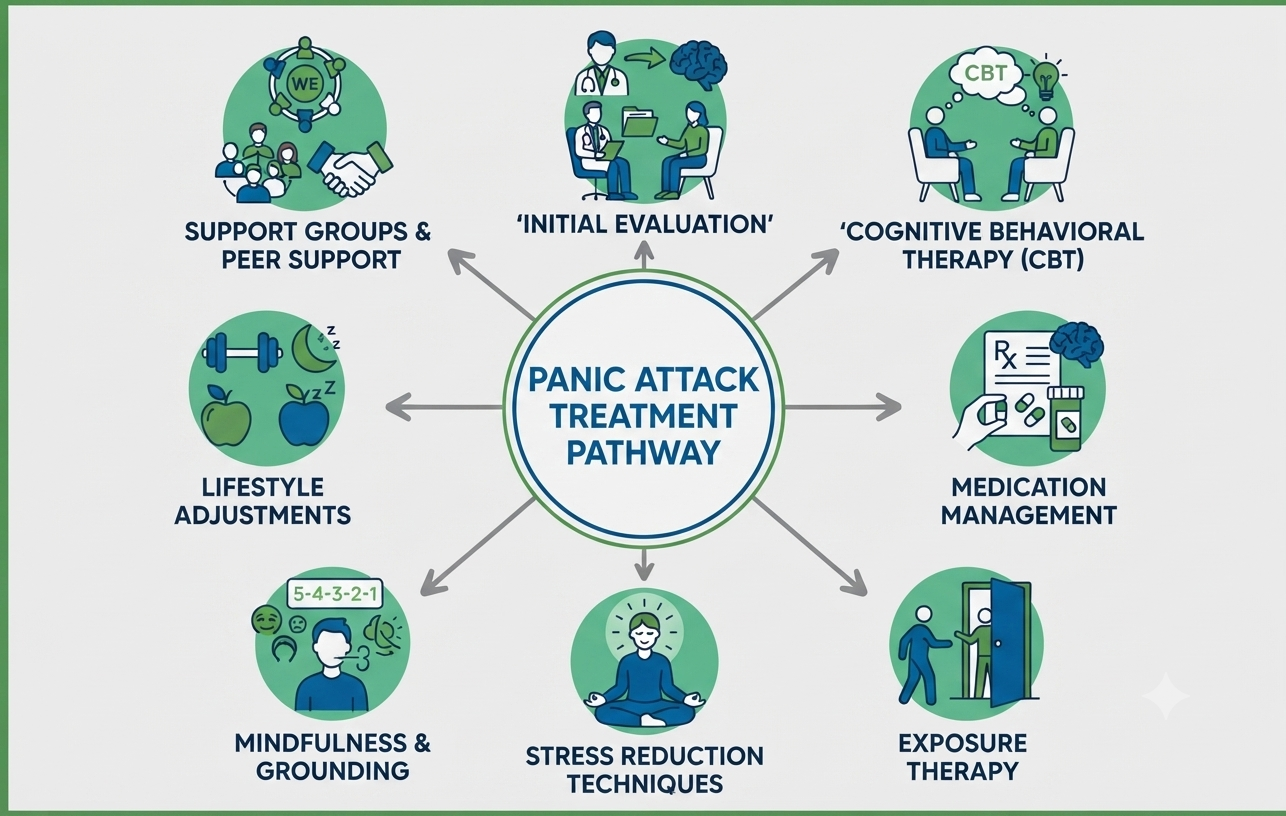
Experience comprehensive, compassionate panic attack treatment exclusively for adults (18+). From initial evaluations to CBT, medication management, and lifestyle adjustments, we guide you through every step of the pathway.
Panic Attack Treatment at a Glance
What is a Panic Attack? Understanding the Basics
Helpful Introduction
Experiencing a panic attack can be one of the most frightening events in a person’s life. Many adults who have their first panic attack believe they are having a medical emergency, such as a heart attack or a stroke. Understanding exactly what a panic attack is represents the first critical step toward finding effective panic attack treatment and regaining control over your life.
Detailed Explanation
A panic attack is a sudden and intense surge of overwhelming fear, panic, or anxiety. These attacks strike without warning and often without an obvious trigger. During a panic attack, your body’s “fight or flight” response is activated unnecessarily. Your brain perceives a massive threat and floods your system with adrenaline, even if you are sitting safely in your living room or lying in bed.
This adrenaline rush causes a cascade of severe physical and emotional symptoms. Your heart races, your breathing becomes shallow, and a profound sense of doom washes over you. While panic attacks are incredibly uncomfortable and frightening, they are not physically dangerous. However, the fear of having another attack can be paralyzing, leading to a condition known as panic disorder.
For adults balancing careers, families, and daily responsibilities, untreated panic attacks can severely impact their quality of life. The good news is that panic attacks are highly treatable. With the right medical guidance, therapeutic interventions, and coping strategies, you can reduce the frequency and intensity of these episodes.
Key Characteristics of a Panic Attack
- Sudden onset: Symptoms typically peak within 10 minutes.
- Intense physical reaction: Often mimics severe medical emergencies.
- Lack of actual danger: The body reacts to a perceived threat, not a real one.
- Lingering anxiety: The attack usually subsides within 20 to 30 minutes, but fatigue and worry can last for hours.
The Neuroscience of a Panic Attack
| Brain Area | Role in the Body | What Happens During a Panic Attack |
|---|---|---|
| Amygdala | The brain’s alarm system | Falsely identifies a threat and sounds the alarm. |
| Hypothalamus | The command center | Sends signals to release stress hormones. |
| Adrenal Glands | Hormone producers | Floods the bloodstream with adrenaline and cortisol. |
| Sympathetic Nervous System | The physical reactor | Increases heart rate, breathing, and muscle tension. |
Learn more about our approach to adult mental health at SNBCare.

If you are experiencing sudden episodes of intense fear, you do not have to manage them alone.
Contact SNBCare TodayRecognizing the Signs: Common Symptoms of a Panic Attack
Helpful Introduction
Recognizing the symptoms of a panic attack is essential for seeking the correct treatment. Because the physical signs are so intense, they are frequently confused with life-threatening medical conditions. By understanding exactly how a panic attack manifests in the body and mind, adults can begin to demystify the experience and take the first steps toward professional care.
Detailed Explanation
Panic attacks are uniquely characterized by their physical intensity. When the body’s alarm system misfires, it affects almost every major organ system. Cardiovascularly, you might experience palpitations or a pounding heart. Respiratorily, you may feel as though you cannot draw a full breath, leading to hyperventilation.
Neurologically, a panic attack can cause dizziness, lightheadedness, or a sensation that the room is spinning. Many adults report tingling or numbness in their hands, feet, or face. Gastrically, the sudden rush of anxiety can cause nausea or an upset stomach.
Mentally, the symptoms are just as profound. Individuals often experience a feeling of depersonalization (feeling detached from oneself) or derealization (feeling that the world around them is not real). The most distressing psychological symptom is often an overwhelming fear of dying, losing control, or completely losing touch with reality. It is crucial to remember that while these sensations are real and terrifying, they are the body’s misguided response to stress, not an actual physical collapse. Proper panic attack treatment focuses on addressing both these physical sensations and the psychological fears attached to them.
Common Physical and Psychological Symptoms
- Racing heart or palpitations
- Shortness of breath or feeling smothered
- Chest pain or discomfort
- Trembling or shaking
- Sweating, chills, or hot flashes
- Nausea or abdominal distress
- Numbness or tingling sensations
- Fear of losing control or dying
- Feeling detached from reality
Panic Attack vs. Heart Attack
| Feature | Panic Attack | Heart Attack |
|---|---|---|
| Onset of Pain | Sudden, often peaking within 10 minutes. | Usually builds gradually over a few minutes. |
| Type of Pain | Sharp, stabbing pain localized to the chest. | Squeezing, crushing pressure or aching in the chest. |
| Pain Radiation | Pain usually stays in the chest area. | Pain often radiates to the arm, jaw, neck, or back. |
| Duration | Usually resolves within 20 to 30 minutes. | Pain is continuous and does not subside. |
| Trigger | Can happen at rest or during times of stress. | Often occurs after physical exertion. |
| Disclaimer | If you are ever unsure about chest pain, seek emergency medical care immediately. Do not attempt to self-diagnose a heart emergency. | |
If you are experiencing these symptoms, exploring professional care is vital. Discover how SNBCare can assist you.
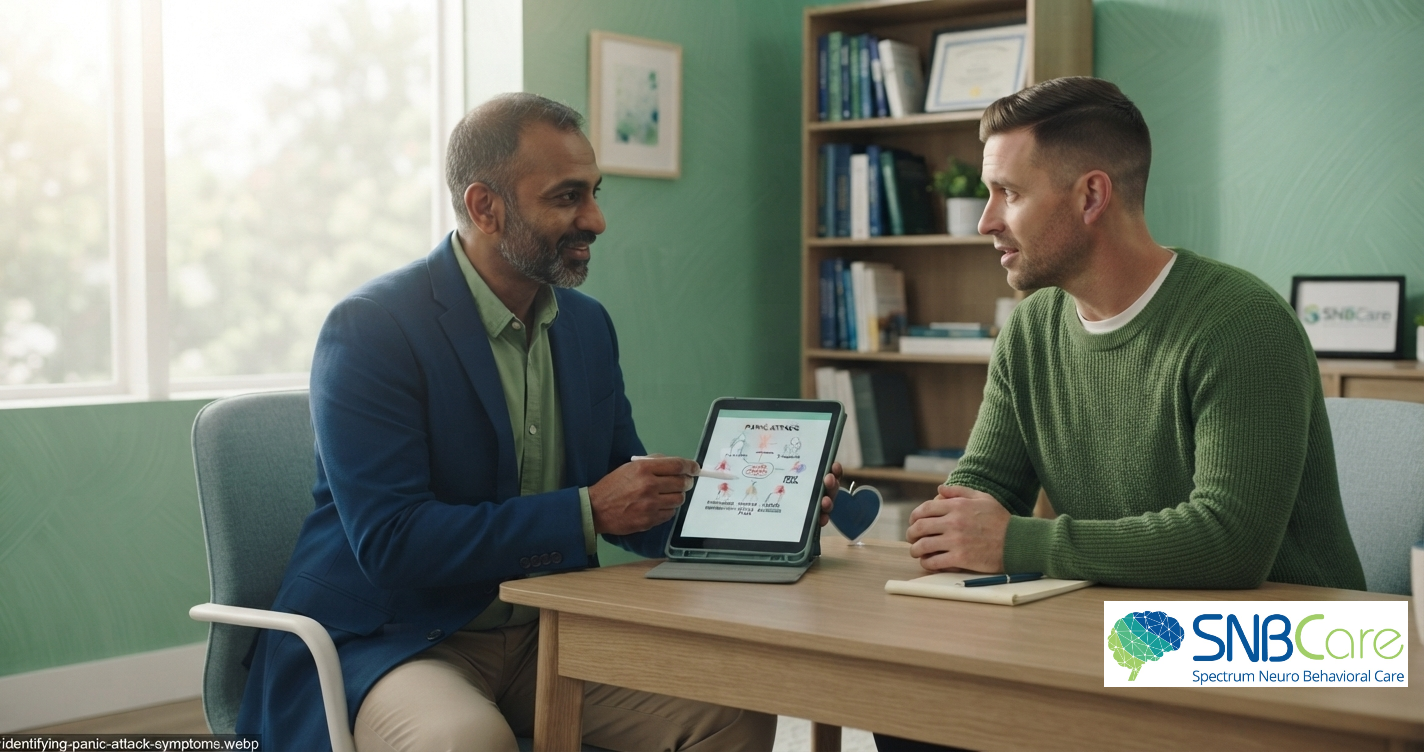
Are panic attack symptoms interfering with your daily life?
Schedule an EvaluationCauses and Triggers of Panic Attacks in Adults
Helpful Introduction
A common question asked by adults seeking panic attack treatment is, “Why is this happening to me?” Panic attacks rarely have a single, simple cause. Instead, they are typically the result of a complex interplay between biological, genetic, and environmental factors. Understanding these root causes can help demystify the condition and reduce the stigma associated with seeking help.
Detailed Explanation
From a biological perspective, some individuals have a nervous system that is simply more sensitive to stress. The amygdala, the part of the brain responsible for processing fear, may be hyper-reactive. Genetics also play a significant role. If you have a family history of panic disorder, anxiety disorders, or depression, you may have a higher predisposition to experiencing panic attacks yourself.
Environmental factors and life stressors are often the catalysts that trigger the first attack. Major life transitions—such as a career change, divorce, the birth of a child, or the loss of a loved one—can create an underlying baseline of chronic stress. When stress levels remain elevated for long periods, the brain’s alarm system becomes prone to misfiring.
Additionally, certain medical conditions and substances can trigger panic attacks. Thyroid abnormalities, heart rhythm disturbances, and respiratory conditions can mimic or induce panic symptoms. High intake of caffeine, the use of certain medications, or the withdrawal from alcohol or recreational substances can also provoke attacks. At SNBCare, our evaluation process carefully considers all these factors to ensure that your panic attack treatment addresses the actual root causes, rather than just masking the symptoms.
Common Triggers for Adults
- Chronic Stress: Prolonged work or family pressure.
- Major Life Changes: Moving, changing jobs, or relationship changes.
- Trauma: Past traumatic events or PTSD.
- Substance Use: Excessive caffeine, nicotine, or alcohol withdrawal.
- Health Concerns: Chronic illness or health anxiety.
- Phobias: Exposure to specific feared situations (e.g., flying, enclosed spaces).
Biological vs. Environmental Causes
| Category | Examples | Impact on Panic |
|---|---|---|
| Biological/Genetic | Family history, brain chemistry, hyper-reactive amygdala. | Lowers the threshold for the “fight or flight” response to activate. |
| Medical/Physical | Thyroid disorders, hypoglycemia, heart conditions. | Creates physical sensations that the brain misinterprets as panic. |
| Environmental | High-stress work environment, relationship conflict, financial strain. | Keeps baseline anxiety high, making sudden panic more likely. |
| Substance-Induced | High caffeine intake, stimulant use, medication side effects. | Artificially stimulates the nervous system, triggering anxiety. |
To learn more about how we evaluate these root causes, please contact the team at SNBCare.

Ready to uncover the root causes of your anxiety?
Reach Out to SNBCareHow Are Panic Attacks Diagnosed?
Helpful Introduction
Proper diagnosis is the cornerstone of effective panic attack treatment. Because panic attack symptoms mirror so many physical illnesses, a thorough medical and psychiatric evaluation is required. At SNBCare, our providers take a comprehensive approach to ensure that nothing is missed, giving you confidence in your diagnosis and your treatment path.
Detailed Explanation
The diagnostic journey usually begins with a physical examination. If you have just had your first panic attack, it is standard medical practice to rule out physical conditions first. Your primary care physician or emergency room doctor may run an ECG to check your heart, order blood tests to check your thyroid function, and evaluate your respiratory system.
Once physical dangers are ruled out, a psychiatric evaluation is the next step. During this evaluation, a mental health professional will talk with you about your symptoms, your medical history, your family history, and your daily life stressors. They will ask specific questions about the intensity, duration, and frequency of your attacks.
Psychiatric providers use the criteria outlined in the Diagnostic and Statistical Manual of Mental Disorders (DSM-5). To be diagnosed with Panic Disorder, an adult must experience recurrent, unexpected panic attacks. Furthermore, these attacks must be followed by at least one month of persistent worry about having another attack or significant maladaptive changes in behavior related to the attacks (such as avoiding places where attacks have occurred). A precise diagnosis ensures that the recommended panic attack treatment is exactly what you need.
Steps in the Diagnostic Process
- Initial Physical Exam: Ruling out cardiovascular or respiratory issues.
- Blood Work: Checking for thyroid abnormalities or vitamin deficiencies.
- Psychiatric Interview: Discussing symptoms, duration, and impact on life.
- Medical History Review: Assessing family history of anxiety or panic disorders.
- DSM-5 Assessment: Evaluating symptoms against clinical criteria.
DSM-5 Criteria for Panic Attacks (Simplified)
| Criteria Category | Description |
|---|---|
| The Event | An abrupt surge of intense fear or discomfort peaking within minutes. |
| Symptom Requirement | Must include at least 4 specific symptoms (e.g., palpitations, sweating, shortness of breath, chest pain, nausea, dizziness, fear of dying). |
| Panic Disorder Addition | Recurrent unexpected attacks followed by a month or more of continuous worry about future attacks. |
| Exclusions | Symptoms cannot be the direct result of substance use, medication, or another medical/mental condition. |
To schedule an official evaluation with our licensed professionals, visit SNBCare.

Don’t let the fear of another panic attack control your life.
Book Your EvaluationEvidence-Based Psychotherapy for Panic Attack Treatment
Helpful Introduction
When it comes to panic attack treatment, psychotherapy—often called talk therapy—is considered a first-line defense. Psychotherapy helps you understand your panic attacks and teaches you how to cope with them so they no longer dictate your life. At SNBCare, we emphasize evidence-based therapeutic modalities that have been proven effective for adults.
Detailed Explanation
The gold standard in psychotherapy for panic attacks is Cognitive Behavioral Therapy (CBT). CBT operates on the principle that your thoughts, feelings, and behaviors are deeply interconnected. During CBT sessions, you work with a therapist to identify the negative, catastrophic thought patterns that fuel your panic. For example, changing the thought “I am having a heart attack” to “I am experiencing panic, and it will pass.”
A specific component of CBT used for panic disorder is Interoceptive Exposure. This technique involves safely and intentionally simulating the physical sensations of a panic attack in the therapist’s office. By breathing through a small straw to simulate shortness of breath, or spinning in a chair to simulate dizziness, you learn that these physical sensations are not dangerous. Over time, your brain stops reacting to these bodily sensations with fear.
Another highly effective approach is In Vivo Exposure Therapy, which helps adults who have developed agoraphobia (fear of places where escape might be difficult) due to their panic attacks. This involves gradual, supported exposure to feared situations, like driving on the highway or going to a crowded grocery store, until the fear response diminishes. Therapy provides the tools needed for long-term resilience and recovery.
Key Benefits of Therapy for Panic Attacks
- Modifies catastrophic thinking patterns.
- Desensitizes the body to panic symptoms.
- Reduces avoidance behaviors.
- Equips patients with lifelong coping skills.
- Provides a safe space to process underlying trauma or stress.
Types of Therapy Used for Panic Attacks
| Therapy Type | Focus | How It Helps |
|---|---|---|
| Cognitive Behavioral Therapy (CBT) | Thoughts and behaviors | Teaches you to reframe fearful thoughts and change reactions to symptoms. |
| Interoceptive Exposure | Physical sensations | Desensitizes you to the physical feelings of panic (e.g., rapid heart rate). |
| In Vivo Exposure | Avoided environments | Helps you slowly return to places or situations you have avoided out of fear. |
| Acceptance and Commitment Therapy (ACT) | Mindfulness and acceptance | Teaches you to accept anxiety without fighting it, reducing its power over you. |
Discover the therapy options available for adults at SNBCare.

Are you ready to learn the tools to overcome panic?
Connect with a TherapistMedication Management for Panic Disorder and Panic Attacks
Helpful Introduction
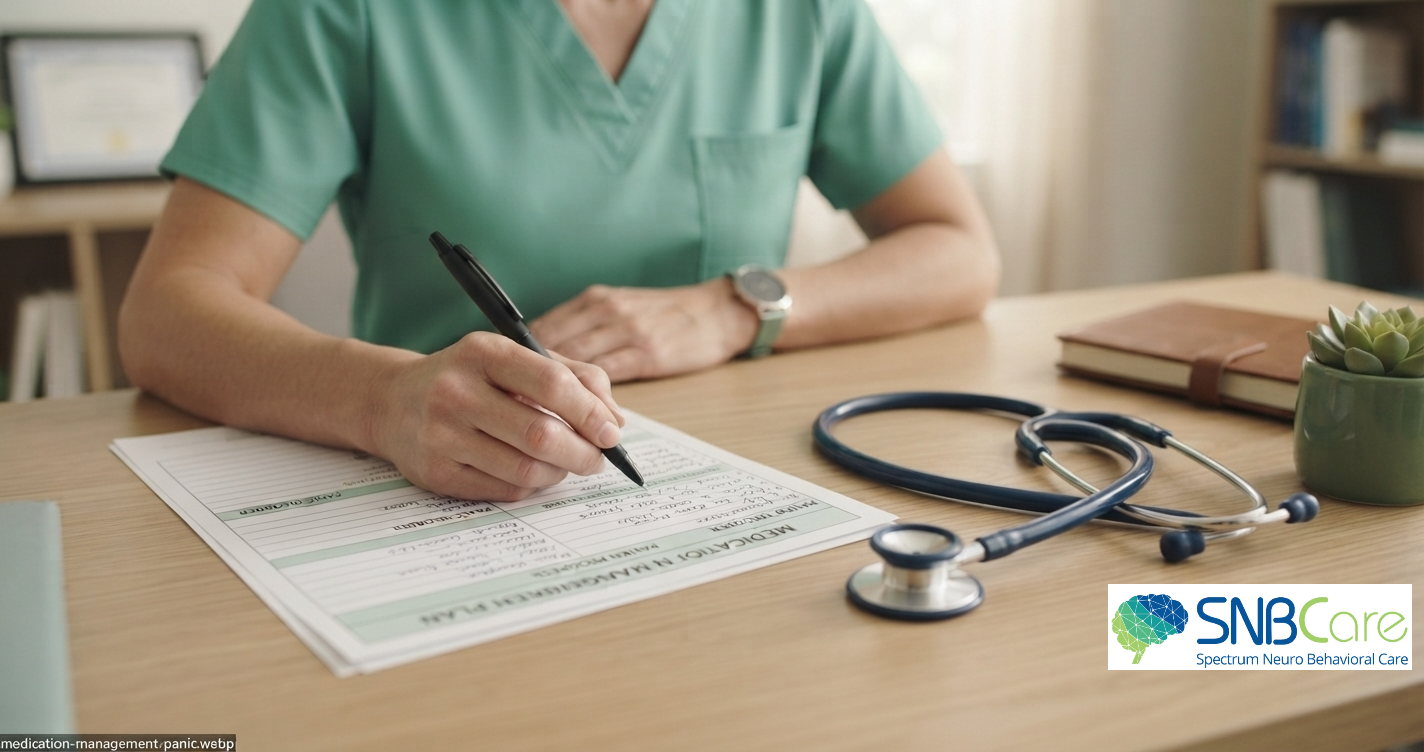
For many adults, psychotherapy is most effective when combined with medication. Medication management is a core component of comprehensive panic attack treatment. Medications can help reduce the severity of symptoms, decrease the frequency of attacks, and lower the baseline anxiety that makes panic attacks more likely.
Detailed Explanation
When prescribing medication for panic attacks, psychiatric providers generally categorize options into long-term preventive medications and short-term, fast-acting medications.
Antidepressants, specifically Selective Serotonin Reuptake Inhibitors (SSRIs) and Serotonin-Norepinephrine Reuptake Inhibitors (SNRIs), are typically the first choice for long-term management. Medications like sertraline, fluoxetine, or venlafaxine alter brain chemistry over time to stabilize mood and reduce the frequency of panic attacks. It is important to note that these medications are not immediate fixes; they generally take several weeks of consistent use to reach their full effectiveness.
For immediate relief during an acute panic attack, providers may prescribe fast-acting medications, such as Benzodiazepines or Beta-blockers. Beta-blockers help control the physical symptoms of anxiety, such as a racing heart or trembling, without affecting cognitive function. Benzodiazepines are central nervous system depressants that work very quickly to stop a panic attack in its tracks. However, these medications carry a risk of dependency and are generally prescribed for short-term use under strict medical supervision.
At SNBCare, our providers conduct thorough evaluations to determine if medication is right for you. We prioritize responsible prescribing practices, close monitoring, and patient education to ensure your treatment is both safe and effective.
Important Medication Considerations
- Medications are often most effective when paired with therapy.
- SSRIs and SNRIs require daily use and time to build up in the system.
- Fast-acting medications are strictly for acute situations and require careful monitoring.
- Never stop taking prescribed psychiatric medication abruptly without consulting your provider.
- Always report side effects to your healthcare team immediately.
Common Medication Classes for Panic Attacks
| Medication Class | How It Works | Typical Use Case | Important Note |
|---|---|---|---|
| SSRIs (e.g., Sertraline, Escitalopram) | Increases serotonin levels in the brain to stabilize mood. | Long-term prevention and daily management. | May take 4-6 weeks to become fully effective. |
| SNRIs (e.g., Venlafaxine, Duloxetine) | Increases serotonin and norepinephrine levels. | Long-term prevention for panic and anxiety. | Requires consistent daily dosing. |
| Beta-Blockers (e.g., Propranolol) | Blocks the effects of adrenaline on the heart. | Situational anxiety to stop physical symptoms. | Does not treat the psychological fear, only the physical reaction. |
| Benzodiazepines (e.g., Lorazepam) | Slows down the central nervous system rapidly. | Acute, severe panic attacks. | Prescribed cautiously due to the risk of tolerance and dependence. |
To learn more about our medication management services, please visit our contact page.
If you want to explore whether medication is right for your panic attack treatment,
Schedule a Medication EvaluationIn-the-Moment Coping Strategies for Panic Attacks
Helpful Introduction
Even with the best long-term panic attack treatment plan, you may still experience acute symptoms while your treatment takes effect. Knowing exactly what to do in the moment a panic attack strikes empowers you to regain control faster. These evidence-based coping strategies are designed to short-circuit the body’s fight-or-flight response.
Detailed Explanation
When a panic attack hits, your breathing typically becomes fast and shallow, which exhales too much carbon dioxide and worsens physical symptoms like dizziness and numbness. Diaphragmatic Breathing is your first line of defense. By taking slow, deep breaths into your belly—inhaling for four seconds, holding for two, and exhaling for six—you signal to your parasympathetic nervous system that it is time to calm down.
Another highly effective strategy is the 5-4-3-2-1 Grounding Technique. This exercise pulls your brain away from internal catastrophic thoughts and forces it to process external sensory data. You identify five things you can see, four things you can touch, three things you can hear, two things you can smell, and one thing you can taste. This interrupts the panic loop in the amygdala.
Using Temperature Shifts is a technique rooted in Dialectical Behavior Therapy (DBT). Splashing cold water on your face or holding an ice cube triggers the “mammalian dive reflex,” which naturally and rapidly slows your heart rate and redirects blood flow to your vital organs, effectively halting the physiological escalation of panic. Remember, the goal of these strategies is not to fight the panic—which often makes it worse—but to ride the wave of anxiety while giving your body the physical signals it needs to relax.
Quick Coping Techniques
- Breathe deeply: Focus on long, slow exhales.
- Ground yourself: Use the 5-4-3-2-1 sensory method.
- Shift temperature: Hold an ice cube or splash cold water on your face.
- Use a coping mantra: Repeat phrases like, “This is uncomfortable, but I am safe.”
- Progressive Muscle Relaxation: Tense and release muscle groups from head to toe.
- Change your posture: Uncross your arms and legs, and sit back to open your chest.
The 5-4-3-2-1 Grounding Method
| Step | Action | Example |
|---|---|---|
| 5 | Acknowledge 5 things you can SEE | A clock, a tree outside, a pen, a cup, a shoe. |
| 4 | Acknowledge 4 things you can TOUCH | The fabric of your chair, your own hands, a cool desk, your clothing. |
| 3 | Acknowledge 3 things you can HEAR | Traffic outside, the hum of the refrigerator, your own breath. |
| 2 | Acknowledge 2 things you can SMELL | Coffee brewing, laundry detergent on your clothes. |
| 1 | Acknowledge 1 thing you can TASTE | A mint, a sip of water, or just the taste in your mouth. |
Need professional guidance on coping strategies? Reach out to SNBCare for support.

Learn personalized coping strategies tailored to your specific triggers.
Contact SNBCare TodayLifestyle Changes and Long-Term Prevention
Helpful Introduction
While professional panic attack treatment is crucial, the daily habits and lifestyle choices you make play a massive role in your overall recovery. By building a supportive, brain-healthy lifestyle, adults can significantly lower their baseline anxiety levels, making the nervous system less prone to triggering a panic attack.
Detailed Explanation
Diet and substance intake heavily influence anxiety. Caffeine, for example, is a powerful stimulant that mimics the physical sensations of panic (racing heart, jitteriness). For individuals prone to panic attacks, reducing or eliminating caffeine, nicotine, and high-sugar energy drinks can result in a dramatic decrease in panic frequency. Similarly, while alcohol may temporarily numb anxiety, the withdrawal effects as it leaves your system often cause a rebound spike in panic.
Sleep hygiene is another critical pillar of prevention. Sleep deprivation keeps the brain in a state of hyper-arousal, increasing the likelihood of a misfiring amygdala. Adults should aim for 7 to 9 hours of quality sleep per night. Establishing a consistent bedtime routine, avoiding screens before bed, and keeping the bedroom cool and dark can vastly improve sleep quality.
Regular physical exercise is one of the most effective natural anxiety reducers available. Aerobic exercises like running, swimming, or cycling burn off excess adrenaline and stimulate the release of endorphins. Furthermore, exercise acts as a form of mild interoceptive exposure; it teaches your brain that a rapid heartbeat and heavy breathing are normal physical responses to exertion, not necessarily signs of impending doom.
Healthy Habits to Support Treatment
- Limit or eliminate caffeine and energy drinks.
- Reduce alcohol intake.
- Prioritize 7-9 hours of consistent sleep.
- Engage in 30 minutes of aerobic exercise daily.
- Practice daily mindfulness, yoga, or meditation.
- Eat balanced meals to prevent blood sugar spikes and crashes.
Lifestyle Factors and Their Impact on Panic
| Lifestyle Factor | Negative Impact (If Poor) | Positive Impact (If Optimized) |
|---|---|---|
| Caffeine | Triggers jitters and mimics panic symptoms. | Decaf options keep the nervous system calm. |
| Sleep | Deprivation leads to hyper-arousal and emotional instability. | Deep sleep restores brain chemistry and lowers stress hormones. |
| Exercise | Sedentary lifestyle allows stress hormones to build up. | Burns off adrenaline, releases calming endorphins. |
| Blood Sugar | Skipping meals causes hypoglycemia, triggering anxiety. | Regular, protein-rich meals keep mood and energy stable. |
To discuss how lifestyle factors affect your mental health, contact the providers at SNBCare.

Build a comprehensive treatment plan that includes lifestyle optimization.
Schedule an AppointmentThe Role of Telehealth in Panic Attack Treatment
Helpful Introduction
Seeking treatment for panic attacks can be daunting, especially if your symptoms make it difficult to leave your home or travel to a clinic. Telehealth has revolutionized the way adults access psychiatric care, offering a convenient, secure, and highly effective alternative to traditional in-person visits.
Detailed Explanation
At SNBCare, we understand that accessibility is a massive barrier to mental healthcare. Telehealth allows you to receive comprehensive panic attack treatment from the safety and comfort of your own home. Using secure, HIPAA-compliant video conferencing technology, our providers can conduct thorough psychiatric evaluations, provide ongoing psychotherapy, and manage your medications virtually.
Research has consistently shown that telehealth outcomes for panic disorder and anxiety are comparable to in-person care. For adults experiencing agoraphobia—a common complication of panic disorder where individuals fear leaving their safe spaces—telehealth is an absolute lifeline. It allows treatment to begin immediately, without the stress of commuting, sitting in a waiting room, or facing triggering environments.
Whether you reside in Massachusetts or Rhode Island, SNBCare’s telehealth services provide flexibility for busy adults. You can schedule sessions during your lunch break, while the kids are at school, or at times that best fit your busy lifestyle. We ensure that the quality of care, compassion, and clinical excellence remains exactly the same, whether you see us on a screen or in our office.
Benefits of Telehealth for Panic Disorder
- Comfort: Attend sessions from your safe space.
- Convenience: No commuting or sitting in waiting rooms.
- Accessibility: Crucial for patients experiencing agoraphobia.
- Flexibility: Easier to fit into a busy schedule.
- Privacy: Secure, HIPAA-compliant platforms protect your data.
Telehealth vs. In-Person Care at SNBCare
| Feature | Telehealth | In-Person Care |
|---|---|---|
| Location | From the comfort of your home. | At our modern clinics in MA or RI. |
| Best For | Agoraphobia, busy schedules, remote areas. | Those who prefer face-to-face physical presence. |
| Services Available | Evaluations, Therapy, Medication Management. | Evaluations, Therapy, Medication Management. |
| Security | 100% HIPAA-compliant video software. | Private, secure clinical offices. |
| Effectiveness | Clinically proven to be highly effective. | The gold standard of traditional care. |
Learn more about our telehealth capabilities at SNBCare.

Prefer to receive care from the comfort of your home?
Book a Telehealth EvaluationWhy Choose SNBCare for Your Panic Attack Treatment?
Helpful Introduction
When you are struggling with panic attacks, choosing the right healthcare provider is a critical decision. You need a team that is experienced, compassionate, and accessible. SNBCare is dedicated exclusively to providing high-quality mental healthcare to adults, ensuring that your treatment plan is tailored to the unique challenges of adult life.
Detailed Explanation
At SNBCare, we treat adults (18+) across Massachusetts and Rhode Island, offering both in-person and telehealth appointments to suit your specific needs. We recognize that waiting months for a psychiatric evaluation can be agonizing when you are suffering from panic attacks. That is why we prioritize accessibility, with appointments often available within approximately one week of your initial outreach.
We believe that high-quality panic attack treatment should be financially accessible. SNBCare accepts major insurance plans, including Blue Cross Blue Shield (BCBS), Aetna, MassHealth, Medicare, and UnitedHealthcare. Our administrative team works diligently to verify your benefits so you can focus entirely on your recovery.
Our providers utilize a patient-centered approach. We do not believe in one-size-fits-all treatments. Whether your optimal path involves cognitive behavioral therapy, carefully monitored medication management, lifestyle adjustments, or a combination of all three, SNBCare is equipped to guide you. We strictly adhere to HIPAA compliance, ensuring that your medical history and treatment details remain completely confidential and secure.
The SNBCare Advantage
- Adult-Focused Care: Specialized treatment exclusively for adults 18 and older.
- Fast Access: Appointments are often available within approximately one week.
- Flexible Options: Choose between in-person visits or telehealth.
- Insurance Friendly: We accept BCBS, Aetna, MassHealth, Medicare, and UnitedHealthcare.
- Comprehensive Services: Offering both therapy and medication management under one roof.
SNBCare Service Overview
| Service Feature | SNBCare Standard |
|---|---|
| Patient Age Group | Exclusively Adults (18+) |
| Appointment Modality | Telehealth and In-Person Options |
| Service Locations | Multiple locations across Massachusetts and Rhode Island |
| Wait Times | Appointments often available within ~1 week |
| Accepted Insurances | BCBS, Aetna, MassHealth, Medicare, UnitedHealthcare, and more. |
To see our full list of locations and services, visit the homepage of SNBCare.

Take the first step toward reclaiming your life from panic attacks.
Contact SNBCare TodayStep-by-Step Guide: Your First Appointment at SNBCare
Helpful Introduction
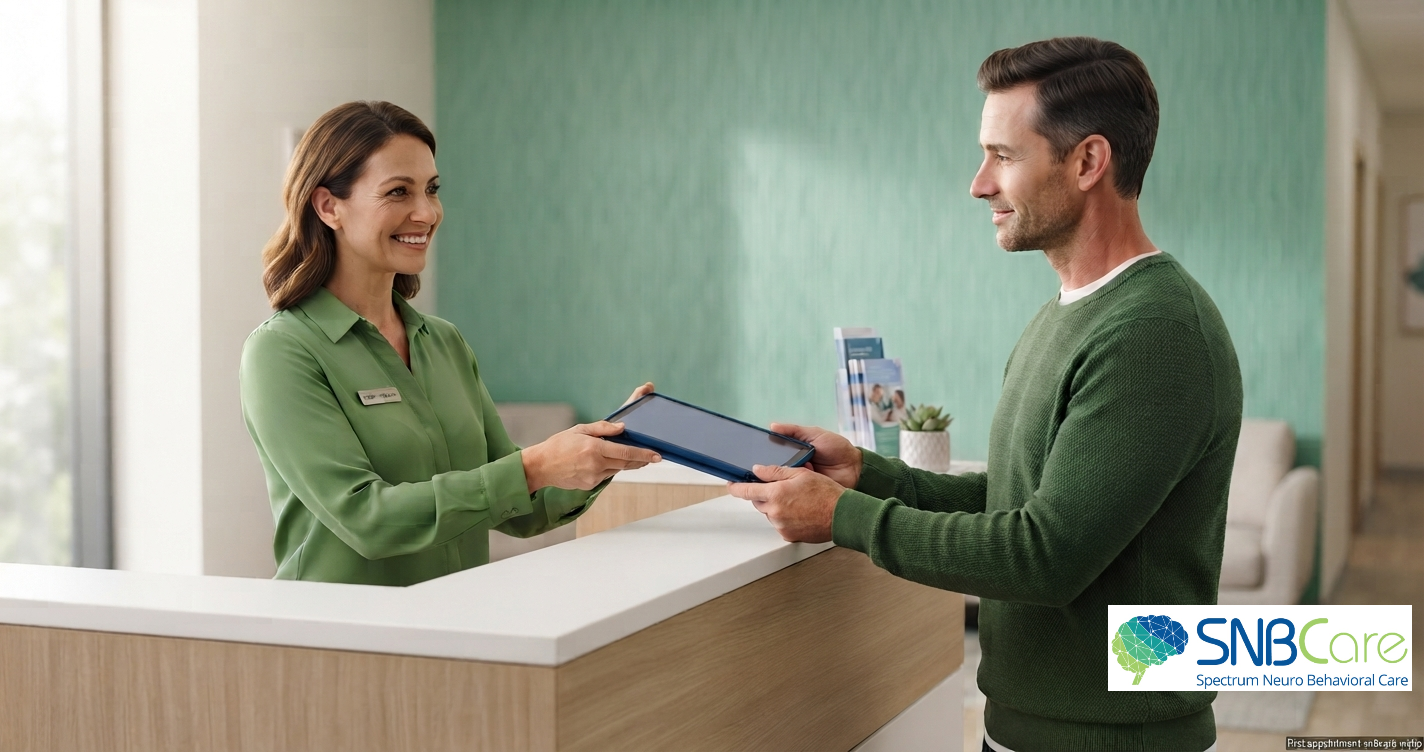
Anxiety about your first psychiatric appointment is completely normal, especially if you are already seeking panic attack treatment. Knowing exactly what to expect can help alleviate this anticipatory anxiety. At SNBCare, we have designed our intake and evaluation process to be as smooth, welcoming, and stress-free as possible.
Detailed Explanation
Step 1: Reaching Out and Scheduling. The process begins when you contact our office via our website or phone. Our compassionate intake coordinators will gather basic demographic information, discuss your insurance coverage (such as Aetna, BCBS, Medicare, or MassHealth), and help you choose between an in-person or telehealth appointment. Appointments are often scheduled within about a week.
Step 2: Completing Intake Forms. Before your appointment, you will receive a secure, HIPAA-compliant link to complete your intake forms online. This paperwork includes questions about your medical history, current symptoms, and family history. Completing this in advance allows your provider to review your background before you even meet, maximizing the time spent directly discussing your care.
Step 3: The Initial Evaluation. During your first 45-to-60-minute session, you will meet with a licensed psychiatric provider. This is a conversational, judgment-free zone. The provider will ask you to describe your panic attacks, how they affect your life, and what you hope to achieve with treatment. They will gently guide the conversation, ensuring they gather all necessary clinical information to make an accurate diagnosis.
Step 4: Collaborative Treatment Planning. By the end of your initial evaluation, your provider will discuss their clinical impressions with you. Together, you will build a personalized treatment plan. This may include recommendations for psychotherapy, starting a new medication, or implementing lifestyle changes. You will leave your first appointment with a clear roadmap for your panic attack treatment.
What to Bring to Your First Appointment
- Valid photo ID and current insurance card.
- A list of all current medications, vitamins, and supplements.
- Any previous psychiatric or medical records (if available).
- A written list of your symptoms and specific panic triggers.
- Questions you want to ask your provider.
The SNBCare Patient Journey
| Step | Action | What to Expect |
|---|---|---|
| 1. Scheduling | Contact SNBCare | Fast scheduling, insurance verification, choice of telehealth or in-person. |
| 2. Preparation | Complete Forms | Secure, digital intake forms completed from home. |
| 3. Evaluation | Meet Provider | A comprehensive, 45-60 minute conversational assessment. |
| 4. Planning | Discuss Options | Collaborative creation of a therapy and/or medication plan. |
| 5. Follow-Up | Ongoing Care | Regular check-ins to monitor progress and adjust treatment as needed. |
Ready to start the process? Fill out our intake form at SNBCare Contact Us.
Are you ready to begin your journey to recovery?
Schedule Your First AppointmentFrequently Asked Questions (FAQs)
1. Can a panic attack happen while I am sleeping?
Yes, nocturnal panic attacks can occur. You may wake up suddenly in a state of extreme fear, experiencing a racing heart, sweating, and shortness of breath. These attacks are similar to daytime panic attacks but happen without an obvious awake trigger. They can disrupt sleep patterns and cause anxiety about going to bed. Treatment, including therapy and medication, is highly effective for nocturnal panic attacks. For more information or to schedule an appointment, please visit: snbcare.com
2. How long does a typical panic attack last?
A typical panic attack comes on suddenly and reaches its peak intensity within about 10 minutes. Most attacks begin to subside within 20 to 30 minutes. However, the physical exhaustion and lingering feelings of anxiety or dread can last for hours after the acute attack has ended. Understanding this timeline can help you ride out the symptoms safely. For more information or to schedule an appointment, please visit: snbcare.com
3. Is panic disorder the same as having a panic attack?
No. Anyone can have an isolated panic attack due to severe stress. However, panic disorder is diagnosed when an adult experiences recurrent, unexpected panic attacks and spends at least a month living in constant fear of having another one. This fear often leads to changing behaviors, like avoiding certain places. Both are treatable conditions. For more information or to schedule an appointment, please visit: snbcare.com
4. Can panic attacks cause permanent physical damage?
While panic attacks cause intense, terrifying physical symptoms like chest pain and a racing heart, they do not cause permanent physical damage to your heart or other organs. The fight-or-flight response is a natural bodily function. However, the chronic stress associated with untreated panic disorder can affect your overall well-being, making treatment essential. For more information or to schedule an appointment, please visit: snbcare.com
5. What is the fastest way to stop a panic attack?
The fastest way to manage an acute panic attack is to engage your parasympathetic nervous system through deep, slow diaphragmatic breathing (e.g., inhale for 4 seconds, exhale for 6 seconds). Grounding techniques, like the 5-4-3-2-1 method, or splashing cold water on your face, can also rapidly interrupt the panic cycle. Some patients may also use prescribed fast-acting medications. For more information or to schedule an appointment, please visit: snbcare.com
6. Do I have to take medication for panic attacks?
Medication is not strictly required for panic attack treatment, though it is highly recommended for many adults. Some patients achieve excellent results with psychotherapy (like CBT) and lifestyle changes alone. Your psychiatric provider will discuss all options with you and help you decide if a combination of therapy and medication is the best path for your specific symptoms. For more information or to schedule an appointment, please visit: snbcare.com
7. Can caffeine trigger a panic attack?
Yes, high doses of caffeine can trigger panic attacks in susceptible individuals. Caffeine is a central nervous system stimulant. It causes your heart rate to increase and can induce jitters, which the brain may misinterpret as the onset of a panic attack, leading to actual panic. Limiting caffeine is a standard recommendation for those with panic disorder. For more information or to schedule an appointment, please visit: snbcare.com
8. Will my health insurance cover panic attack treatment?
Most major health insurance plans cover mental health services, including panic attack treatment. SNBCare accepts several major insurance plans, including BCBS, Aetna, MassHealth, Medicare, and UnitedHealthcare. Coverage details can vary based on your specific policy, so our administrative team is available to help verify your benefits before your first appointment. For more information or to schedule an appointment, please visit: snbcare.com
9. How do I know if I am having a panic attack or a heart attack?
Panic attacks and heart attacks share symptoms like chest pain and shortness of breath. However, panic attack pain is usually sharp and localized, peaking in 10 minutes. Heart attack pain often feels like crushing pressure that radiates to the arm or jaw and does not subside. If you are ever in doubt, seek emergency medical attention immediately. For more information or to schedule an appointment, please visit: snbcare.com
10. What is agoraphobia, and how is it related to panic attacks?
Agoraphobia is an anxiety disorder characterized by a fear of places or situations where escape might be difficult or help unavailable if a panic attack occurs. It often develops as a complication of panic disorder, as individuals begin to avoid places where they previously experienced attacks (like crowded spaces or public transit). Therapy is highly effective for agoraphobia. For more information or to schedule an appointment, please visit: snbcare.com
11. Does SNBCare treat teenagers with panic attacks?
No, SNBCare specializes exclusively in adult mental healthcare. We provide psychiatric services and panic attack treatment only for patients who are 18 years of age and older. This allows our providers to focus deeply on the unique stressors, lifestyle factors, and medical needs specific to adult patients. For more information or to schedule an appointment, please visit: snbcare.com
12. Are virtual telehealth appointments as effective as in-person visits?
Extensive research shows that telehealth is just as effective as in-person care for treating anxiety and panic disorders. Telehealth allows you to receive therapy and medication management via secure video from the comfort of your home, which is especially beneficial for adults with busy schedules or those experiencing agoraphobia. For more information or to schedule an appointment, please visit: snbcare.com
13. How quickly can I get an appointment at SNBCare?
We understand that waiting for mental health treatment is difficult. At SNBCare, we prioritize accessible care. For new adult patients seeking evaluation and treatment for panic attacks, appointments are often available within approximately one week of contacting our office. Availability may vary slightly by location and provider schedule. For more information or to schedule an appointment, please visit: snbcare.com
14. What happens if my current panic attack medication stops working?
It is not uncommon for adults to develop a tolerance to a medication or for its effectiveness to wane over time. If your symptoms return, do not stop taking your medication abruptly. Contact your psychiatric provider. They can safely adjust your dosage, switch you to a different medication class, or augment your treatment plan with therapy. For more information or to schedule an appointment, please visit: snbcare.com
15. Can exercise help prevent panic attacks?
Yes, regular aerobic exercise is highly beneficial for preventing panic attacks. Exercise burns off excess stress hormones like cortisol and adrenaline, releases mood-boosting endorphins, and helps regulate your nervous system. It also acts as a natural way to desensitize your brain to physical arousal, proving that a rapid heart rate is not always a sign of danger. For more information or to schedule an appointment, please visit: snbcare.com